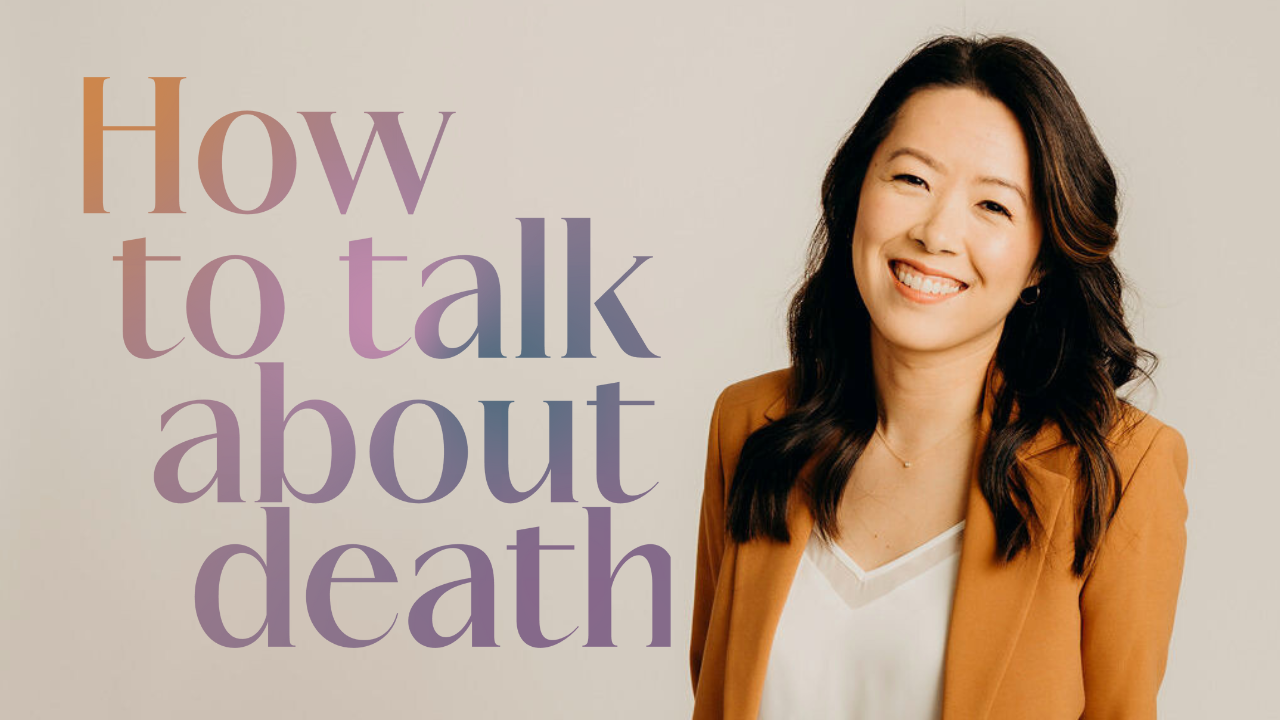
with Dr. Luyi Kathy Zhang
A 2 hour online masterclass that gives you the tools, language, and confidence to talk to aging parents (and other loved ones) about death so you can strengthen your bond, avoid future uncertainty and honor their wishes with love & respect
This workshop will help you go from:
- Feeling deeply uncomfortable and unprepared to talk about “the big stuff”... to having an organized plan of action for what lies ahead
- Worrying about how to care for your loved one as they get weaker… to knowing exactly what your options are and how to navigate any situation that may arise
- Not knowing how your loved one wants to be cared for at the end of life…to being confident you can honor their wishes when it matters most
- Feeling overwhelmed with the burden of caregiving and the emotional toll of impending grief…to having the knowledge, language and tools to move forward with calm confidence
Does this sound familiar?
- You’ve done some research but the sheer amount of information out there is overwhelming and you’re not sure whether the information truly applies to you
- You know it’s important to talk about the future but you’re so paralyzed by fear that you keep pushing it off…all while continuing to worry if one day you’ll regret not having these conversations sooner
- You want to talk to your loved one about death but you don’t want to scare them or make them lose hope either
- You have no idea how to even start these discussions
- You’ve tried to have these conversations but your loved one won’t engage or completely shuts down
- Or maybe you’re the one who has a medical condition and you want your family to be prepared for what may come
I get it.
This is the work I do every single day in the hospital as a hospice and palliative care doctor
I’ll share the specific language and wording that I personally use to talk to patients and families about these delicate topics, along with the common pitfalls I’ve seen over the years
Hi! I’m Dr. Kathy
I’m a physician who cares for seriously and/or terminally ill patients.
A big part of my job is to help patients and families plan for the future in a way that aligns with their values.
And that includes some difficult conversations, like telling people they have weeks to live and helping families manage everything that comes with those situations.
I’ve spent years at the bedside talking to people about their goals and wishes for the end of life, counseling families on how to prepare for the inevitable.
I’ve seen how grounded and peaceful patients are when they know exactly what they want. I’ve witnessed how calm their families are when they know how their loved one wants to be treated when time is short.
I’ve also seen how painful it can be when people haven’t had the difficult conversations.
The uncertainty. The sleepless nights. Not knowing if you’re making the right decision because your loved one can no longer speak for themselves.
Scrambling for paperwork, calling insurance companies and visiting nursing facilities while you’re trying to work and care for your own family, much less yourself.
That’s why I created this class—so more people have the opportunity to learn how to navigate these conversations for themselves.
In my world, we like to say “hope for the best and prepare for everything else”.

✅ Who this class is for:
Proactive people who know the importance of being prepared for the future and want guidance on how to discuss death and dying with their aging parent or with a loved one who is diagnosed with a serious/terminal illness
❌ This class is NOT for you if:
- You do not wish to think of nor talk about death or dying at all
- You’re not willing to put in the work over time to engage your loved one
- You’re not willing to get a little uncomfortable with yourself and your emotions
- You are not invested in the health, well-being and quality of life of your loved one
Here's what you'll learn:
-
Differences between palliative care and hospice
-
Step by step approach to engaging in these discussions
-
How to approach a hesitant or outright avoidant loved one
-
How to approach making decisions for the future and how to share information
-
How to manage and talk about tradeoffs: symptom burden, awareness, independence, quality of life, prognosis
-
How to care for your loved one as their needs evolve: home vs nursing facility vs hospice
-
Questions to ask to discover and prioritize your loved ones values for the end of life
-
Forms: health care proxy, do not resuscitate, physician orders for life sustaining treatment
Imagine what it would be like if:
-
You deepened the connection with your loved one even more because you had the tough conversations
-
You knew exactly how they would want to be cared for at the end of life and had the tools to advocate for it
-
You had the necessary paperwork filled out to share with medical providers
-
You felt more calm and prepared for the future, even if you can’t predict what will happen
-
You understood what your options were in terms of your loved one’s future care needs and how to navigate the medical system
-
You felt confident you could make medical decisions for your loved one if they couldn’t speak for themselves
-
The weight of the unknown was lifted off you and you could just enjoy each other’s company and be fully present during this time of their life
Frequently Asked Questions